Dashboard
Needs gander signup. These commands are hidden from gander --help until a token is saved.
The dashboard is the browser UI for everything the token can do that is awkward in a terminal: scanning shares, flipping visibility and commenting, managing the team, rotating the API token. It needs signup.
gander manage
gander dashboard
gander dash
gander --d
Those are the same flow. The CLI mints a short-lived manage intent, opens a confirm page in your browser, and (after you confirm) sets a session cookie and redirects to /dashboard. If you are already signed in as that user, confirm is skipped.
You can also go to /login with your email and password if you attached one at signup or later.
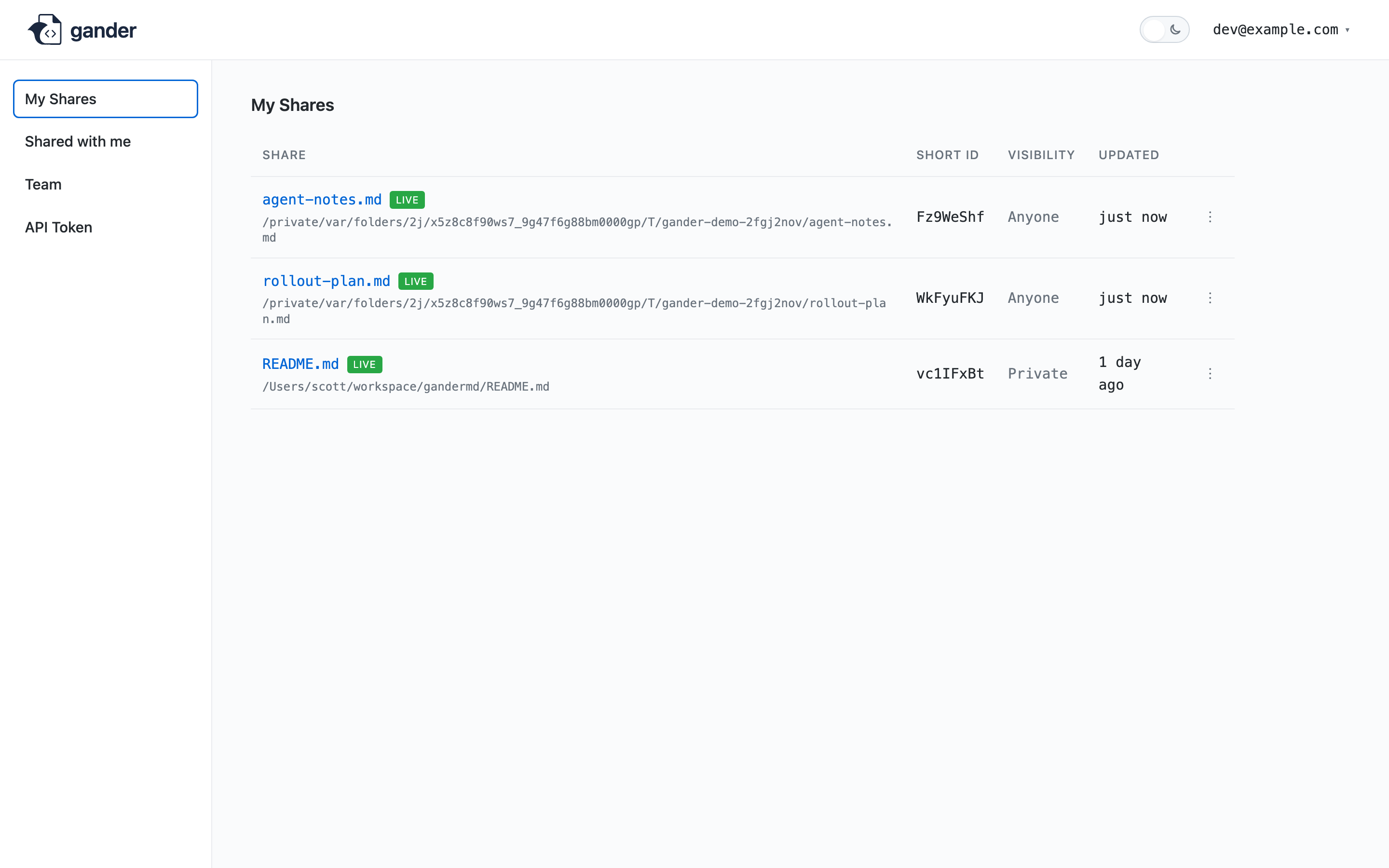
Shares
The home dashboard lists your shares with unresolved counts, commenting, and visibility. From there you can:
- Open the live viewer
- Delete a share (same effect as
gander remove) - Set visibility to Anyone, Private, or Hidden
- Set commenting to Anyone, Private, or Disabled
Anyone commenting is hidden unless visibility is Anyone. That matches the CLI. Changing these from the dashboard is the right move when a watch loop is already running and you do not want to pass flags on every save. See Visibility.
Team
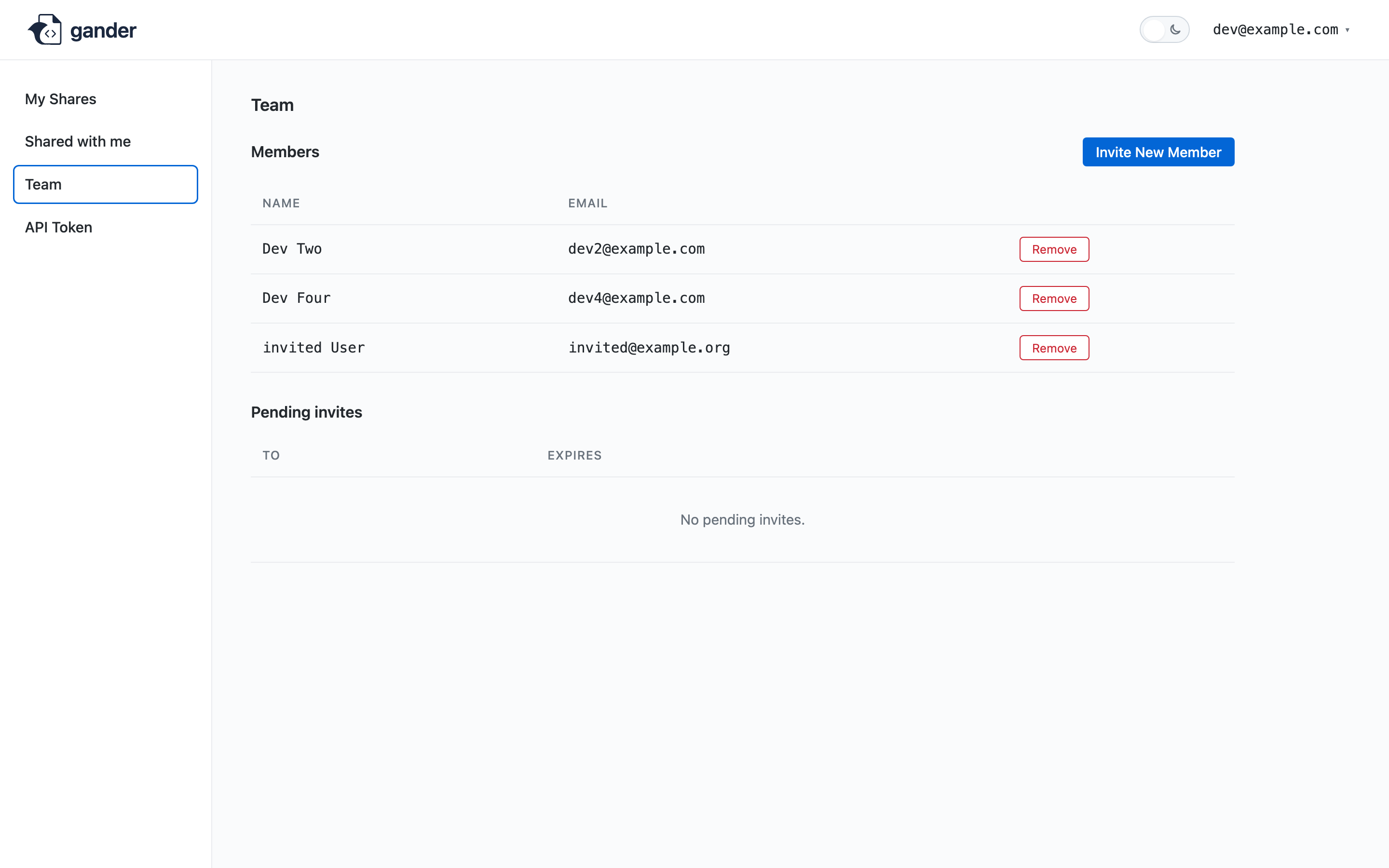
/dashboard/team lists members, pending invites, and the create/revoke/remove actions described in Invites. Optional email on create. The invite URL is shown once.
Token rotation
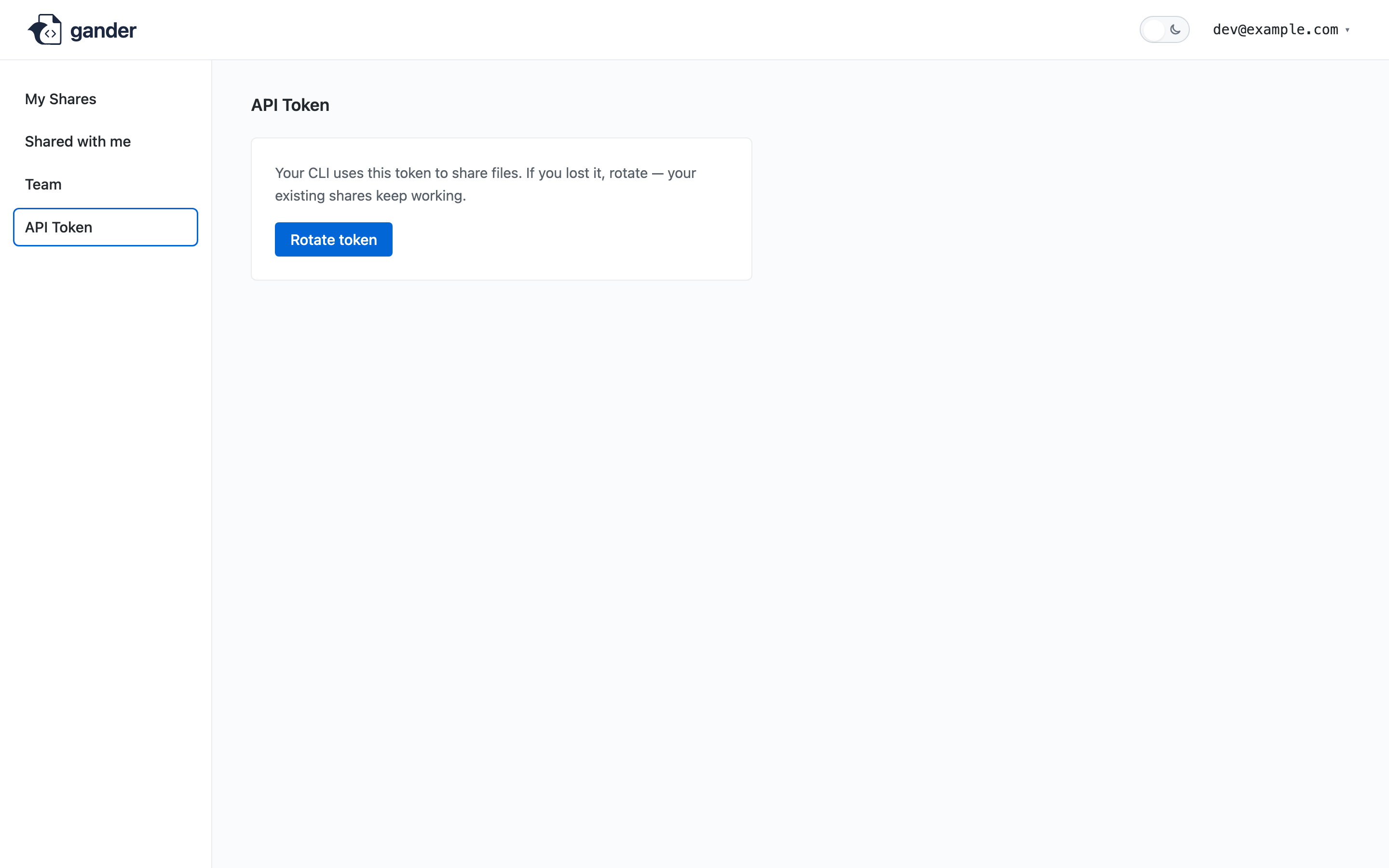
The dashboard can mint a new API token and show it once. The previous token stops working. Each machine that should keep calling the API needs the new value:
gander auth gmd_…
gander auth validates the token before writing ~/.gander/config.json. MCP and the CLI both read that file, so you do not re-run gander mcp install after a rotate unless the binary moved.
If you signed up with a token only and never set a password, /api/account/claim (or the dashboard prompt) lets you attach one so login works without the CLI handshake.